
Trading Card Investing Guide
Contents
What is TCG investing & why do people buy/invest?
Trading Card Game (TCG) investing refers to the practice of buying and holding trading cards as a form of “investment”. Traditionally, trading cards were associated with sports, collectibles, or other popular culture phenomena. People are buy trading cards as an investment for several reasons, and these motivations can vary depending on the individual. Here are some common reasons why people choose to invest in trading cards:
Potential for Appreciation: Investors may believe that certain trading cards/sealed boxes will appreciate in value over time. This could be due to the historical significance of the card, the rarity of the edition, or the popularity of the featured athlete or character.
Nostalgia and Sentimental Value: Many individuals have a strong emotional connection to trading cards from their childhood or a particular period in their lives.
Limited Supply: The scarcity of certain trading cards/boxes can drive up their value. Limited editions, rare variations, or cards from specific events or milestones may have a lower supply, making them more attractive to investors e.g. limited to /1, /10, /100, /500 cards or signed cards.
Speculation and Trends: Like any investment market, trading cards can be influenced by speculation and trends. Some investors aim to identify cards/boxes that are undervalued or anticipate future trends, with an aim of buying cards with the expectation of selling them at a profit later.
What indicators rise the value of cards/boxes?
Probably the most important question in the hobby, and the answer is it depends. Depending on the hobby such as Disney, Pokemon, Sports One Piece there can be numerous factors to consider
Rule of thumb: The first box release of any new TCG is usually going to be the most sought after naturally. We have seen this Pokemon 1999 1st Edition boxes as well as One Piece Romance Dawn boxes recently in 2023. However, for any new TCG there are always risks which we highlight later in this guide.
Sports
Usually a lot harder than non-sports but if there is a rising player such as Bellingham, Haaland and Mbappe, usually boxes which contain their first ever ‘rookie cards’ or RC cards will sky rocket in value.
Its a lot to do with player performance. If Bellingham, Haaland and Mbappe start to decline then the demand/hype to buy the boxes/cards will also fall.
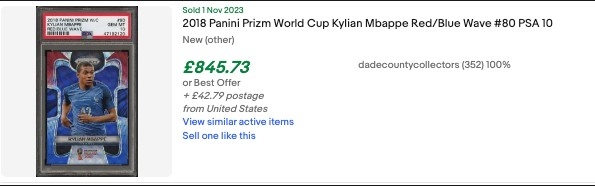
For example: Leading up to the 2020 Champions League final, the Mbappe 2018 Prizm PSA 10 card surged from £700 to over £2,271, driven by expectations of a historic win for Paris and France. However, PSG's loss resulted in a 25% drop in price, stabilizing around £480 six weeks later. Player card values are susceptible to performance outcomes and hype, posing inherent risks in such investments, with potential drops in value even from player injuries.
Non-sports
Pokemon, One Piece and others fall in this category and usually offer the best returns.
Historically, there has not been one single sealed Pokemon box which hasn’t eventually gained value. As long as you have the capacity to hold, it will eventually increase in value as time goes on.
What this video: https://www.youtube.com/watch?v=v6x18f41WMQ
Example 1
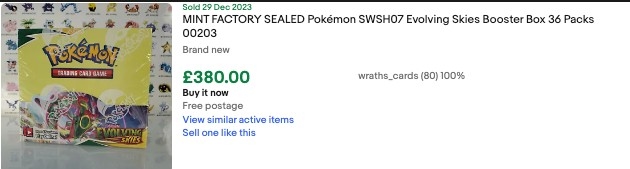
Pokemon Evolving Skies booster boxes released in 2021, retailed for £100 and even restocked a few times before going out of print. Now, 2 years later in 2023 the boxes are reselling for £350+.
Watch this video: https://www.youtube.com/watch?v=vrLnBl6Ijs4
Example 2
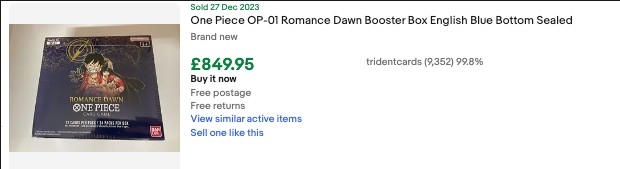
One Piece Romance Dawn was the first ever TCG release for the brand which retailed for £80. It restocked numerous times, sat in stock for retail for months but the player base continued to be strong.
The company continues to innovate their TCG by bringing out new hyped sets to keep the player base Interests high. When Romance Dawn finally went out of the print, as the player base was high, the first box set sky rocketed in value to £500+ a box. Imagine you had 10.
Grading your cards - PSA & Beckett
Card grading is a process in which trading cards are professionally assessed and assigned a grade by specialized companies such as PSA and Beckett. The grading process involves evaluating the card's condition, authenticity, and overall quality based on predetermined criteria. The assigned grade is typically a numerical score, with higher grades indicating better overall condition.
Grades start from 1 and end at 10, with 10 being the best grade you can receive and will demand the most premium resell price.
Authenticity Assurance: Grading provides a level of assurance regarding the authenticity of a trading card. The process involves thorough examination to verify that the card is genuine and has not been altered or tampered with.
Increased Value: Graded cards often command higher prices in the market. Collectors and investors are willing to pay a premium for cards that have been professionally graded, especially if they receive high grades. The grade serves as a quick reference for the card's overall quality.
PSA are the more popular company to grade with and more ‘commercial’. However, Beckett are also good but a lot harsher on their grading.
It is advised to stick to PSA when you start out.
English cards vs other languages
A very debatable topic, especially between English vs Japanese cards. For languages outside of those two, I personally wouldn’t consider purchasing as the demand isn’t there unless they release a super hyped exclusive card/set.
Japanese cards are known for their superior card quality and its a lot easier to pull a PSA 10 grade worthy card. Typically they go out of rotation a lot faster than English. Japanese cards are also a lot cheaper at RRP.
However, if you compare the demand for English over Japanese, the English language is spoken worldwide which branches out its customers reach and demand. Japanese cards will only typically be sought after by Japanese people or niche collectors outside of Japan.
Japanese collectors/fans also tend to go a bit crazy for ‘Waifu’ cards which is the term used to show a strong affection for a particular anime character that they consider them their waifu (wife or husband). Yes, you read that right. Waifu cards are usually female trainer cards (Japanese) and can resell for hundreds alone.
Rule of thumb is to invest mainly in English sets over Japanese sets, unless there are exclusive cards within a Japanese set which could skyrocket its demand over English. For example, Pokemon 151 Japanese booster boxes contain masterball rare holo cards with a pull rate of 1 per booster box. English 151 booster boxes did not have this series of card included.
With 151 being a nostalgic set and recreation of the original 151 Pokemon with modern art, then it would make sense to have some exposure to 151 Japanese booster boxes within your portfolio.
Sealed booster boxes vs card Investing
Sealed booster boxes are the much safer option than investing/grading in PSA/Beckett 10 card overall.
Pokemon for example, as the boxes ‘rotate’ out of print and newer releases happen, historically the out of print boxes eventually start to increase in price on the secondary market. There has not been a single sealed Pokemon box which hasn’t been profitable but depending on the set, you may have to hold certain sets longer than others.
As long as the set you are purchasing have good ‘hit’ cards aka sought after cards which are individually reselling for a good amount, typically that set will be good to invest in for a sealed box. As those ‘hit’ cards gain further value in the future, it will result in the sealed box also to increase in value. Its a lot easier and less risky to invest in a sealed box rather the actual Pokemon card.
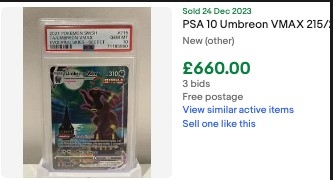
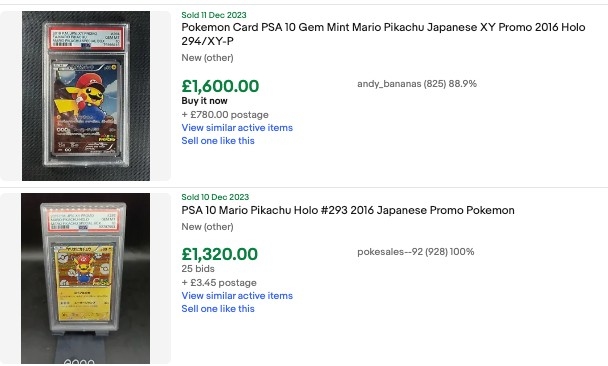
However, sometimes there will be ‘no brainer’ single card to invest in such as the Pikachu Mario promo cards which now go for over £1,000 in PSA 10.
Watch this video for further information: https://www.youtube.com/watch?v=UY6-3_IbgQI
What are sealed booster box ‘cases’?
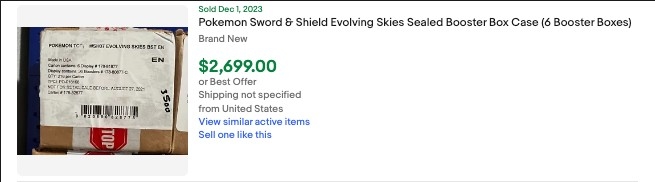
A sealed case is a sealed ‘box’ containing typically 6 sealed booster boxes.
For example, a sealed case in Pokemon will have 6 sealed booster boxes of that set.
Usually, ‘hit’ cards will be stated in X amount in a sealed case. If a certain set in a TCG sky rockets in value, the sealed case will sky rocket even further as they will be guaranteed X amount of ‘hit’ cards.
Cases will be a lot more expensive to buy initially but are definitely the way forward. If you can’t afford to invest in cases, just go for sealed booster boxes and sell when the price is right to increase your bank roll.
Risks of TCG Investing
Like any type of investing, there are always risks.
Everything I will be posting will be products I am buying personally but its vital you always DO YOUR OWN RESEARCH.
• Sealed boxes reduces the risks overall over buying PSA 10 cards.
• Pokemon is historically the “safest sealed” products to buy.
• With any TCG, you will usually need to hold products for at least 24+ months from their initial release or more to see a movement in price. More sought after products will increase in resell faster.
• Do not over leverage yourself. You have no point to prove, stay in your lane. This is investing, use the ‘spare’ cash you don’t need day to day.