STOCKS, SHARES & INVESTMENTS GUIDE
Contents
Disclaimer:
The Content is for informational purposes only, you should not construe any such information or other material as legal, tax, investment, financial, or other advice. Nothing contained on our Site constitutes a solicitation, recommendation, endorsement, or offer by Resell Connect or any third party service provider to buy or sell any securities or other financial instruments.
There are risks associated with investing in securities. Investing in stocks, bonds, exchange traded funds, mutual funds, and money market funds involve risk of loss. Loss of principal is possible. Some high risk investments may use leverage, which will accentuate gains & losses. Foreign investing involves special risks, including a greater volatility and political, economic and currency risks and differences in accounting methods. A security’s or a firm’s past investment performance is not a guarantee or predictor of future investment performance.
Investing for beginners
Deciding whether or not investing is right for you will depend on a number of factors - for example: your goals, your timeframe and your tolerance to risk. As a general rule, if you think you will need the money in the next three years and you're not comfortable with the thought your pot can go down as well as up, investing probably isn't right for you.
How does investing work?
Investing means buying something - an asset - that you believe will increase in value over time, whether that is a share of a company, a property, gold or even what we do here! Resell.
Why Invest?
1. The future value of money - One reason we invest is to have a the potential to have a larger pot in the future. The longer you invest, the more likely you are to generate greater returns. For example, shares in individual companies may give you large gains, but also large losses. Government bonds will be more steady, less volatile with a lower chance of loss, and emerging market shares can be more higher risk than developed market shares.
2. Inflation- It lowers the value of our money over time. So, while the actual number remains the same, it will be worth far less in years to come. In order to beat inflation, your money has to generate a return better than the prevailing inflation rate - and that’s where investing comes in.
3. Compounding- The basic concept is simple. In the first year of investing, you generate returns on your initial investment. In the second year, you invest the capital plus the returns, and you generate further returns on the total. And so it goes on, and your money snowballs into a pot that you can eventually retire on.
WHAT ARE STOCKS AND SHARES?
‘Stocks’ is generally used to refer to portions of ownership of multiple companies – for example, you could say that you own stock in Amazon and Microsoft ‘Shares’ usually refers to units of ownership in a specific company – for example, you could say that you own ten Amazon shares
WHAT IS THE S&P 500?
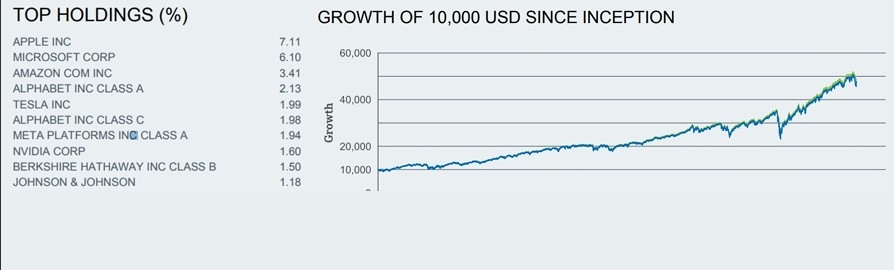
The S&P 500 is a type of index fund. Specifically; it's the 500 best performing companies in the US. Because of the depth and diversity, the S&P 500 is widely regarded as one of the best gauges of the U.S. stock market. The S&P 500 is widely regarded as the gold standard for index funds, with an average yearly return of over 10% since it began in 1957.
The SPX are can be broken up into sectors, like Healthcare, IT, Financials. These all make up a part of the index. Within that sector there will be companies. For example under the Information Technology sector you will have Microsoft. 28% of the index is IT sector. The SPX contains companies like Apple, Google, Amazon, Tesla etc.
If you decided to put £500 into an S&P 500 index fund and then put £250 in there every month for the next 40 years, based on previous performance, you would have £1.5 million (adjusted for inflation). Which would be your retirement sorted! This is why we are so keen for you to learn about the powers of investing. Yes, you won't be a millionaire over night, but it's a last resort and tried and tested!
Could the S&P 500 in theory go to 0? Well in theory yes, but if this happened you would have far more worries on your hands than money, as this would suggest a complete destruction of the entire US/World economy.
Investment Accounts
There are several ways you can Invest your money, the below products are ways which allow you to invest tax efficiently.
Stocks and Shares ISA
An ISA, or Individual Savings Account, is a tax-efficient way of investing your money. In practice this means that you can contribute up to the maximum ISA allowance (currently £20,000) and any growth, returns or interest you earn are tax-free.
Lifetime ISA
This can be opened by anyone aged between 18 and 39. You can save up to £4,000 a year in it, towards your first home or retirement, and the Government adds a cash bonus of up to £1,000 a year on top.
How does it Work?
You can save up to £4000 a year, you can invest this monthly or in one lump sum. The government will then add a 25% bonus on top. So, for every £1000 you save you will end up with an extra £250. If you save £4000 in one year, you will have £5000
Tip: If you invest £4000 into a LISA before 1st April, and £4000 after 7th April. You will get £2000 in Government Bonuses.
This is not financial advice and you should always carry out thorough research before you invest or seek advice from a financial advisor. The below is a good guide in acknowledging the caveats of ISA's. https://www.moneyhelper.org.uk/en/savings/types-of-savings/a-guide-to-lifetime-isas
Starting to Invest
There are several ways you can start you investment journey.
1. You can either actively manage your portfolio - You make the decisions on what you want to hold in your portfolio. This can be done using providers such as FreeTrade which is explained in the next page.
2. Use an Investment Provider to do the heavy lifting for you. Nutmeg is one of the most clear and straightforward experiences. They are regulated by the FCA and is currently the largest digital wealth manager. They are also a JP Morgan company.
They cut through the complications and make it incredibly straightforward.
1.Set your Goal- What is your risk level, what are your goals?
2. Choose your Investment Style
They have several different investment styles which you can invest in.
• Fully Managed - These are proactively managed by an Investment Team
• Smart Alpha - Actively managed by the JP Morgan Asset Management team. They combine their in-house research to select the best securities.
• Socially Responsible - With a focus on the environment and Society.
• Fixed Allocation - Usually buy and hold that does not require daily management.
If you invest via the link below you get NO Nutmeg Management fees for an entire 6 months. Link: https://rb.gy/bbqfym
HOW TO BUY STOCKS & SHARES:
The easiest app to use is 'Trading 212', this can found in the IOS and Google Play store. In my opinion this is the easiest way to get into stocks & shares. They are regulated by the FCA and are covered by the Financial Services Compensation Scheme, which means if Trading 212 were to ever go bust, your funds are protected up to £85,000! You ideally want to sign up for the ISA as this allows you to invest up to £20,000 a year tax free!
How to set up a Freetrade account:
As a trading platform, you'll need to be of at least 18 years of age. You'll also be KYC'd (know your customer) in which you'll be asked to upload a government-issued photo ID.
1. Join by using this link https://www.trading212.com/invite/4DqeaI8WhYFby using the referral link above, we both get a free share worth up to £100!
2. Add your personal information; include all information on your chosen government photo ID. You'll be asked to upload this in the next step. Please also note that you will need your national insurance number, so make sure to have this to hand.
3. Upload your preferred government-issued photo ID to ensure ID verification, follow the steps carefully.
4. Finally, link your payment details in order for you to start buying stocks & shares.
THE RISKS OF STOCKS AND SHARES:
Although investing in the stock market is seen as a 'safer' alternative to the Crypto market, there are still inherent risks. As I spoke about before, most risks are negated with an index fund like S&P 500, but you have to understand it is a long game. The market could quite easy 'crash' 15-20% and if you're not prepared for this, you might panic and pull out. For example, in 2020 we saw a huge crash at the beginning of the year, with almost a 30% drop, however by the end of 2020 the market had increased to end the year at an increase of 16.26% compared to the end of 2019.
Instead of panic selling or just holding, market crashes should be used as an opportunity to 'Dollar-Cost Average' (DCA), in other words buy more when the market dips, to average out your buy in cost. For example, let's say you bought 1 stock for £500, the market crashes and the stock drops 50% and is now worth £250 (extreme example). If you then use this as an opportunity to buy another £500 worth, you now have 3 stocks and have spent £1000, meaning the average price you paid for the stock is £333. Now in a years time, the stock is now worth £600, because you DCA'd you're up almost 100%, whereas if you just held and didn't buy more, you'd only be up 20% which is a big difference. This is why you need to ensure that when there are 'red days', when the market is down a lot, use it as an opportunity to buy more. Think of it as a discount, if you're in stocks and shares for the long game (which you should be), red days are good days.
The reason I like the S&P 500 so much, is because it is based off the top 500 best performing companies. It is Globally diversified growth through large US based multinational companies. These are regularly are swapped out, if a certain stock continues to underperform, this is why the index does so well continually year on year.
CRYPTO VS STOCKS:
Crypto is far more volatile than stocks due to the lack of regulation in the crypto market. This makes crypto more dangerous to your portfolio and stocks much safer. Although the gains to be made in crypto are much larger than the ones in stocks. You have a higher risk of losing all of your investment in crypto than you do in stocks. Generally, the idea is to invest in crypto if you see blockchain as the future of technology.
Crypto is generally not backed by physical cash or company assets like stocks are. These two assets are very different from one another. As a result, I personally look to put most of my investment into already established companies, as a result, the S&P 500 is the perfect match. But then Crypto, in my opinion, is still worth the gamble. So I put a much smaller allocation into there. I normally aim for 80/20 ratio; 80% into the S&P 500 and 20% into Crypto/Other 'riskier investments'/
GOOD VIDEOS TO WATCH